
Matcha bowls come in various shapes, and each shape not only affects the visual impression but also the ease of holding, the ease of whisking matcha, and the seasonal feel.
In tea ceremony, bowls are sometimes chosen to match the season or the tea setting, but if you're enjoying matcha at home, there's no need to adhere strictly to these rules. Prioritize your personal preference and ease of use when selecting your favorite bowl.
| Shape | Characteristics | Main Seasons of Use |
|---|---|---|
| Bowl-shaped | Standard and easy to handle | All year round |
| Shallow (Hira-chawan) | Shallow and wide-mouthed, giving a cool impression | Summer |
| "Horse-trough" (Badarai) / "Combined" (Ai-chawan) | Intermediate shape between bowl-shaped and shallow | Spring to autumn / All year round |
| Cylindrical (Tsutsu-chawan) | Deep, easily retaining warmth | Winter |
| "Shoe-shaped" (Kutsugata) / Irregular | Shapes that often express the artist's individuality | All year round |
| Travel (Tabi-chawan) / Outdoor (Nodate-chawan) | Small and easy to carry | All year round |
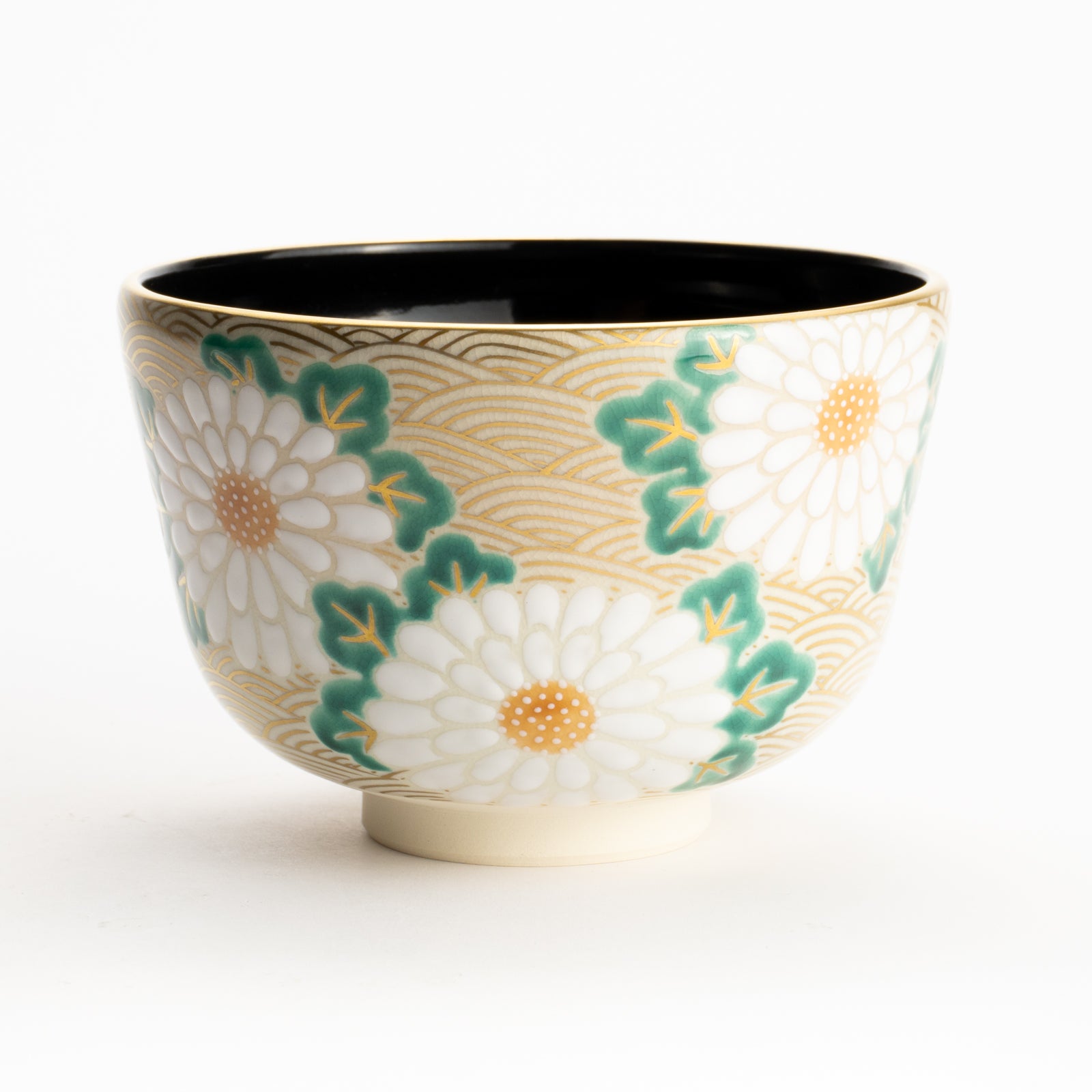
Bowl-shaped (Wan-nari)
The bowl-shaped (wan-nari) matcha bowl is the standard form among matcha bowls. Its moderately open mouth and rounded body provide ample space for whisking, making it easy to use even for those new to preparing matcha.
It is suitable for use throughout the year and is commonly seen in Kyo-yaki and Kiyomizu-yaki ceramics. This shape is recommended for a first bowl or for those looking for an everyday matcha bowl that isn't limited by season.
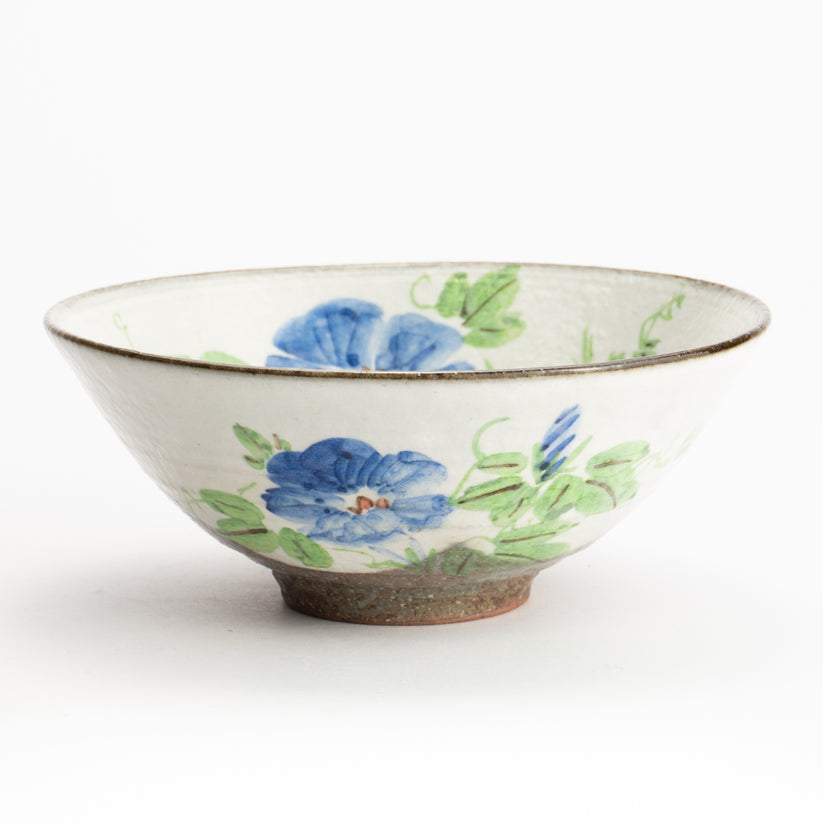
Shallow Bowl (Hira-chawan)
The Hira-chawan is characterized by its wide, shallow shape. It prevents matcha from getting too hot and gives a cool, refreshing impression, making it primarily used in summer tea ceremonies.
Its wide interior, known as "mikomi," makes it easy to appreciate the painted designs or glaze patterns on the inside of the bowl. It harmonizes well with summer motifs such as green maple leaves, flowing water, and morning glories.
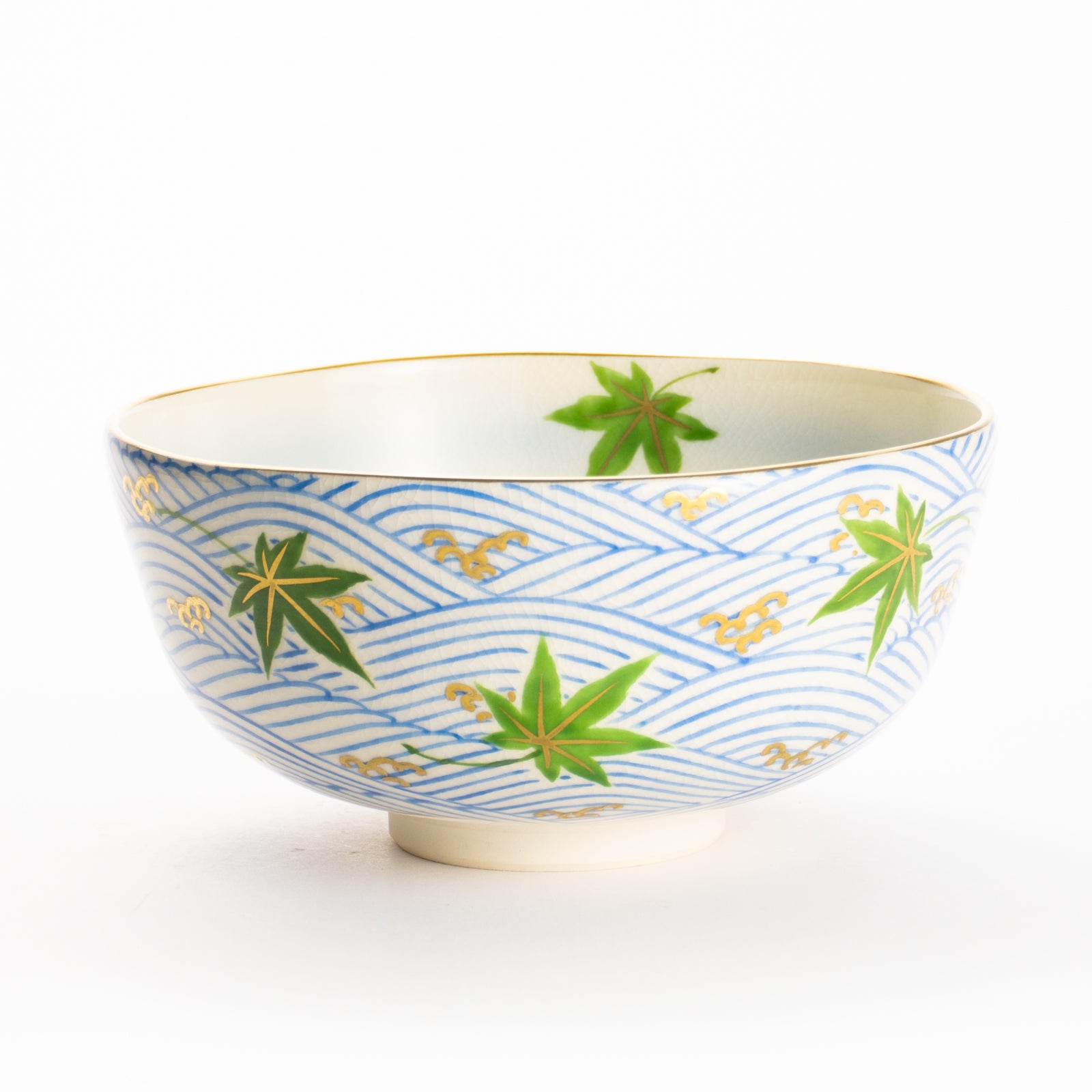
"Horse-trough" (Badarai) / "Combined" (Ai-chawan)
Badarai
Badarai bowls are shallower than standard bowl-shaped ones, but not as extremely shallow as Hira-chawan. Their wide opening gives a light and airy impression, generally used from spring to autumn.
Being deeper than Hira-chawan, they allow for easier whisking, making them a practical choice that combines seasonal flair with usability.
Ai-chawan
Ai-chawan bowls are a slightly shallower shape, positioned between the standard bowl shape and the Hira-chawan. With their moderate depth and wide opening, they are considered versatile for use across most seasons.
Please note that the names and specific shapes of Badarai and Ai-chawan can vary slightly depending on the tea ceremony school or artisan.

Cylindrical Bowl (Tsutsu-chawan)
Tsutsu-chawan are characterized by their relatively narrow mouth and deep body. They retain the warmth of the matcha well and feel warm to the touch, making them frequently used in colder seasons.
They pair well with winter motifs such as snowy landscapes, camellias, and pines, creating a serene tea experience.

"Shoe-shaped" (Kutsugata) and other irregular matcha bowls
Kutsugata bowls have rims that are deformed into elliptical or irregular shapes, resembling a "shoe" (kutsu). Their appearance changes depending on the viewing angle, and they have a unique charm when held.
Besides Kutsugata, matcha bowls come in various irregular shapes reflecting the artist's sensibilities, such as square, polygonal, or petal-like outlines. These are suited for those who seek individuality in shape or wish to enjoy them as sculptural works.
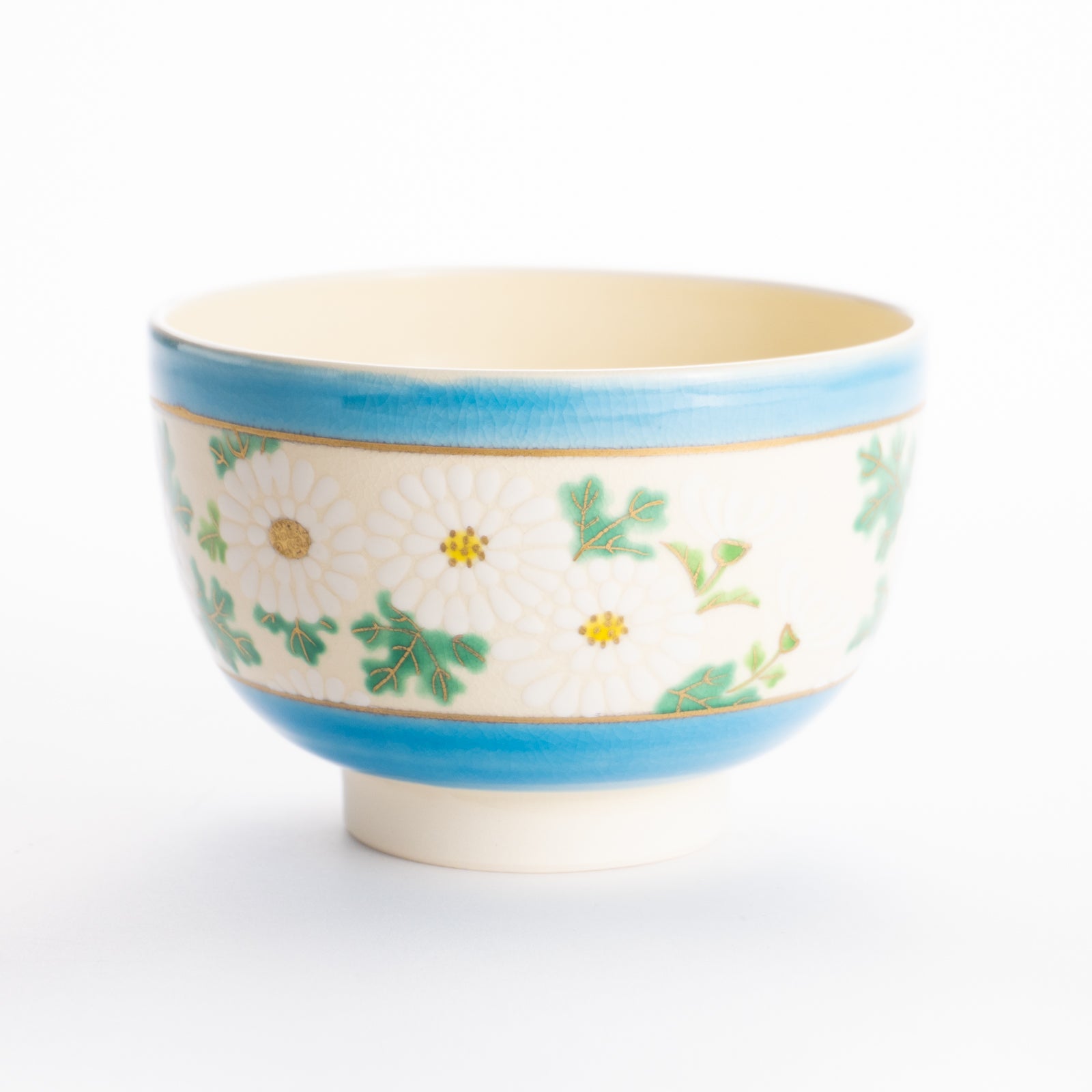
Travel Bowl (Tabi-chawan) / Outdoor Tea Bowl (Nodate-chawan)
Tabi-chawan and Nodate-chawan are typically smaller than standard matcha bowls, designed for portability.
Nodate-chawan are made with lightness and portability in mind for enjoying matcha outdoors during "nodate" (outdoor tea ceremony). Tabi-chawan are intended for carrying tea utensils while traveling and may be bundled with items like a chasen (tea whisk) and natsume (tea caddy).
Their small size and comfortable fit in the hand make them suitable not only for outdoor use or travel but also for those who want to easily enjoy a small amount of matcha at home.

Tenmoku Bowls
Tenmoku bowls are matcha bowls adorned with iron glaze, primarily in black or brown. Originating from Chinese Song Dynasty bowls, they have been cherished in Japan as tea utensils.
Many feature a graceful shape with a wide opening and a constricted body, along with a small footrim, and are often placed on a special stand called a Tenmoku-dai.
Their greatest charm lies in the expression of the glaze created during firing. There are diverse patterns even within Tenmoku bowls, such as Yōhen Tenmoku with starry speckles on a jet-black glazed surface, Yuteki Tenmoku with silver droplet-like patterns, and Noge Tenmoku with fine streaky patterns. These patterns arise from the complex interplay of glaze components, kiln temperature, and flame conditions, allowing each bowl to display a unique expression.
The deep black surface accentuates the vibrant green of the matcha, creating a quiet and dignified atmosphere distinct from brightly painted designs. These bowls are recommended for those who appreciate variations in glaze and how light plays on the surface, or for those seeking a matcha bowl with a subdued impression.
If you're unsure about choosing your first matcha bowl
For your first bowl, a standard bowl-shaped (wan-nari) one is recommended, as it's easy to use throughout the year and allows for comfortable whisking. If you prefer a slightly shallower shape, Badarai or Ai-chawan are also good options.
Using different shapes according to the season—a Hira-chawan for summer and a Tsutsu-chawan for winter—is one way to enjoy matcha. When using it at home, feel free to prioritize ease of handling and your preferred design, rather than sticking strictly to conventions.


